Residential Roof Installation vs. Roof Replacement: Which Is Right for You?

Your roof represents one of the most significant investments in your home. It protects your family, belongings, and the structural integrity of your house from weather, temperature extremes, and environmental damage. When roof problems arise, or you're building a new home, understanding the difference between residential roof installation and roof replacement becomes important for making informed decisions.
Many homeowners use these terms interchangeably, but they describe different processes with distinct considerations regarding cost, timeline, and scope of work. Knowing which option suits your situation helps you budget appropriately, set realistic expectations, and choose the right contractors for the job. This guide clarifies the differences and helps you determine which approach makes sense for your home.
Key Differences Between Roof Installation and Roof Replacement
Understanding what distinguishes these two roofing processes helps clarify which service you actually need.
Scope of Work
Residential roof installation typically refers to putting a roof on a structure that doesn't currently have one. This happens most commonly with new construction—a newly built home or addition needs a complete roofing system installed from scratch. The process starts with bare roof decking and includes installing underlayment, drip edges, flashing, ventilation components, and finally the visible roofing material.
Roof replacement involves removing an existing roof and installing a new one in its place. This process begins with tearing off old shingles, tiles, or other roofing materials down to the roof deck. Contractors then inspect the decking for damage, make necessary repairs, and proceed with installing a new roofing system. Replacement projects often uncover hidden issues like rotten wood or inadequate ventilation that need addressing before new materials go on.
Cost Considerations
New residential roof installation on new construction generally costs less per square foot than replacement because it doesn't include demolition and disposal of existing materials. Contractors can work more efficiently without the additional step of tear-off and cleanup.
Roof replacement includes disposal fees for old roofing materials, which can be substantial depending on the material type and local landfill rates. Replacement projects also carry a higher risk of discovering underlying problems that increase costs—damaged decking, inadequate ventilation, or structural issues hidden beneath the old roof.
Types of Materials
Both residential roof installation and replacement offer the same material choices. Asphalt shingles remain the most popular option due to their balance of cost, durability, and aesthetics. They're available in various styles, colors, and quality levels with warranties ranging from 20 to 50 years.
Residential metal roof installation has grown increasingly popular for both new construction and replacement projects. Metal roofs offer exceptional durability, lasting 40 to 70 years with minimal maintenance. They're energy-efficient, fire-resistant, and available in numerous styles mimicking traditional shingles, tiles, or offering distinctive standing seam profiles.
Time Frame for Completion
New residential roof installation on straightforward projects typically completes faster than replacement. Without demolition and disposal, crews can proceed directly to installation. A standard residential roof installation might take 3 to 7 days, depending on size, complexity, and weather.
Replacement projects add time for tear-off and disposal, plus potential delays if underlying damage needs repair. Most residential roof replacements take 5 to 10 days, though complex projects or those requiring extensive deck repair may take longer. Weather significantly impacts both timelines, as roofing work cannot proceed safely during rain, high winds, or extreme temperatures.

Deciding Between Residential Roof Installation and Roof Replacement
Several factors determine which service your situation requires and which makes the most financial sense.
Factors That Influence the Decision
The primary factor is simple: does your structure currently have a roof? New construction, room additions, or buildings previously lacking proper roofing require installation. Existing structures with failing or damaged roofs need replacement.
Beyond this basic distinction, several considerations apply to homeowners deciding whether to replace an aging roof or work with what they have:
- Roof age and condition: Roofs approaching the end of their expected lifespan generally warrant replacement rather than continued repairs. A 20-year-old asphalt shingle roof showing widespread damage needs replacement, not patching.
- Extent of damage: Localized damage affecting small areas might be repairable, while widespread issues throughout the roof system indicate replacement time has arrived.
- Future plans: If you plan to sell your home soon, a new roof significantly improves marketability and value. If you're staying long-term, replacement provides peace of mind and eliminates ongoing repair costs.
- Budget and financing: Replacement represents a major expense. Some homeowners opt to patch and repair temporarily while saving for eventual replacement, though this approach risks additional damage if major failures occur.
When to Opt for Roof Installation
Choose residential roof installation when:
- Building a new home or structure
- Adding a room ora significant addition requiring new roofing
- Converting an unroofed space like a patio into an enclosed living space
- Building detached structures like garages, sheds, or workshops
New installation provides the opportunity to select optimal materials and design the roofing system correctly from the start, with proper ventilation, flashing, and underlayment.
When to Opt for Roof Replacement
Replacement becomes necessary when:
- Your existing roof has reached or exceeded its expected lifespan
- Widespread damage affects multiple areas of the roof
- You're experiencing frequent leaks in different locations
- Visible deterioration appears throughout the roof surface
- You want to upgrade to different roofing materials
- Energy costs suggest poor roof insulation or ventilation
- You're preparing to sell and need to address the roof condition
Replacement allows you to correct problems with the existing roof system, upgrade materials, improve ventilation, and modernize your home's appearance.
What to Expect When Hiring a Professional Roofing Company
Whether pursuing installation or replacement, working with qualified professionals ensures proper execution and long-lasting results.
Choosing Between Roof Installation Companies and Roof Replacement Contractors
Most professional roofing companies handle both residential roof installation and replacement. When seeking contractors, look for companies with specific experience relevant to your project type. If you're considering residential metal roof installation, find contractors with proven metal roofing expertise, as installation techniques differ significantly from those of asphalt shingles.
Local contractors often provide advantages. They understand regional weather challenges, comply with local building codes, and maintain reputations in the community. For example, finding a residential roof installation company in your specific area, such as a residential roof installation Charlotte NC contractor if you live in that region, means working with professionals familiar with local climate conditions, permitting requirements, and material suppliers.
Key Qualities to Look for in a Roofing Contractor
Verify contractors hold proper licensing and insurance. Roofing involves significant liability—workers on your roof could be injured, and improper work could damage your home. Legitimate contractors carry both general liability insurance and workers' compensation coverage.
Check references and review portfolios of completed work. Established residential roof installation companies should readily provide customer references and examples of similar projects. Contact references to ask about work quality, professionalism, cleanup, and whether projects stayed on budget and schedule.
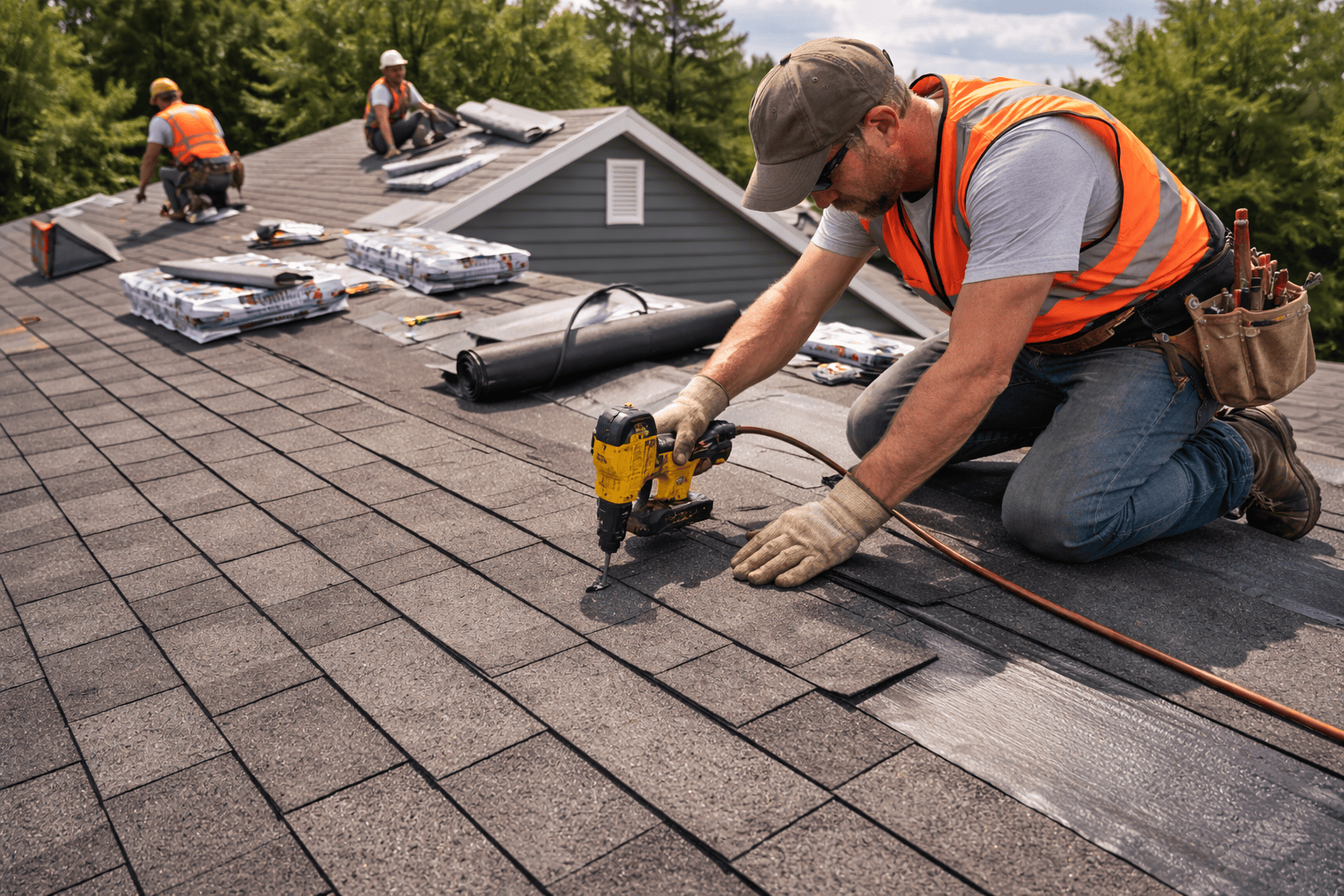
Roof Installation vs. Roof Replacement Cost Breakdown
Understanding cost factors helps you budget appropriately for your roofing project.
Cost of Roof Installation
New residential roof installation on typical single-family homes costs between $5,000 and $25,000, with most projects falling in the $8,000 to $15,000 range. Costs vary based on:
- Roof size (measured in squares, with one square equaling 100 square feet)
- Material choice (asphalt shingles are the least expensive, while slate and tile cost significantly more)
- Roof complexity (multiple valleys, dormers, or steep pitch increases labor)
- Location and local labor rates
- Additional features like skylights or solar panels
Residential metal roof installation typically costs more upfront than asphalt shingles—usually $10,000 to $30,000 for average homes—but offersa longer lifespan and lower lifetime costs.
Cost of Roof Replacement
Roof replacement generally costs 15-25% more than a comparable new residential roof installation due to tear-off and disposal expenses. Expect to pay $6,000 to $30,000 for most residential replacement projects, with typical costs ranging from $10,000 to $18,000.
Additional factors affecting replacement costs include:
- Number of existing roof layers to remove (homes with multiple layers cost more)
- Condition of underlying decking (damaged decking requires replacement)
- Disposal fees for old materials
- Necessary repairs to ventilation, flashing, or structure
- Upgrades to underlayment or ice barrier systems
Get detailed written estimates itemizing all costs. Compare quotes from multiple contractors, but remember the lowest bid isn't always the best value. Quality materials and experienced installation provide better long-term value than cheap materials installed hastily.
Conclusion
The choice between residential roof installation and roof replacement depends primarily on your situation. New construction and additions require installation, while existing homes with aging or damaged roofs need replacement. Both processes involve similar materials and techniques, but replacement includes additional steps for removing old materials and addressing hidden damage.
Cost differences exist, with replacement typically running higher due to demolition and disposal. However, replacement offers the opportunity to correct existing problems, upgrade materials, and modernize your home's protection and appearance. New residential roof installation provides a clean slate, allowing optimal material selection and proper system design from the beginning.