


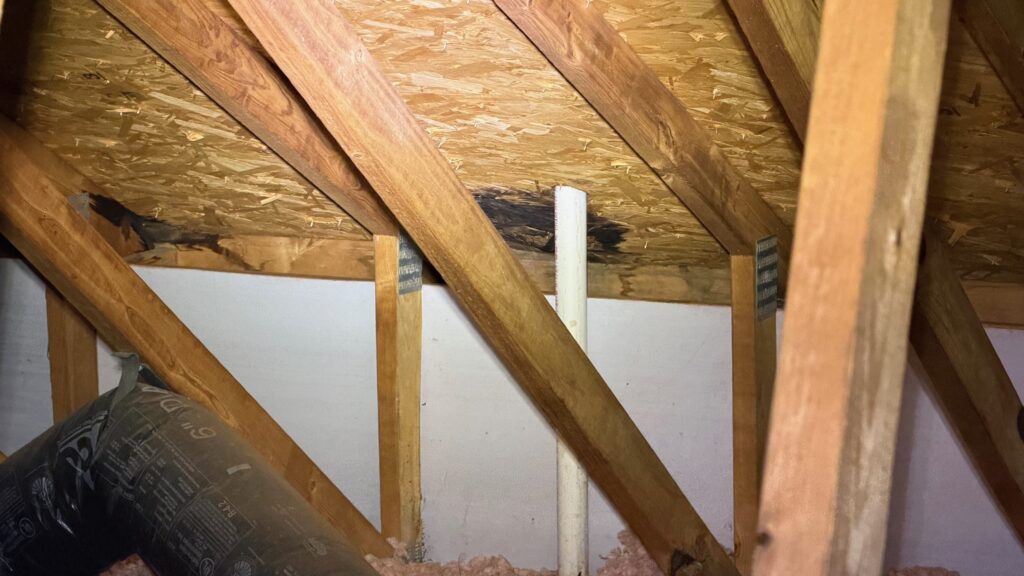
Short answer: if your roof is leaking right now, catch the water, protect your belongings, take photos, and call a roofer for an emergency tarp. Don't climb on a wet roof. Most leaks in the Charlotte area come from a handful of spots (pipe boots, flashing, valleys and skylights), and many can be fixed with a repair, not a new roof.
Here's exactly what to do, step by step, plus what usually causes the leak and when insurance helps pay.
Leak happening now? Call Charlotte Ace Roofing at (704) 396-8383. We provide emergency tarping across Charlotte, Mint Hill, Matthews, Indian Trail, Monroe, Waxhaw and Harrisburg.
What to Do in the First 30 Minutes
- Catch the water. Put a bucket, trash can or storage bin under the drip. Lay a towel inside the bucket so the splashing doesn't spread water across the floor.
- Move what you can. Pull furniture, rugs, electronics and boxes away from the wet area. Cover anything too heavy to move with a plastic sheet or trash bags.
- Relieve a bulging ceiling. If the drywall is sagging with a bubble of water, stand to the side and poke a small hole in the lowest point with a screwdriver, with a bucket underneath. It sounds wrong, but letting the water out in one spot is far better than the whole section of ceiling coming down.
- Stay safe around electricity. If water is near a light fixture, ceiling fan or outlet, switch off that circuit at the breaker and keep everyone out of the area.
- Take photos and video. Photograph the ceiling stain, the drip, any damaged items, and the outside of the roof from the ground. Note the date and time. If you end up filing an insurance claim, this is the proof your adjuster will ask for.
- Check the attic if it's safe. With a flashlight, look above the wet spot for damp wood, wet insulation or daylight. Water often enters the roof several feet away from where it shows on the ceiling, so this helps us find the source faster.
- Call a roofer for a tarp. A properly secured tarp stops more water from getting in until the repair can be done.
What Not to Do
- Don't go up on the roof in the rain. Wet shingles are slick, and a fall is far more expensive than any leak.
- Don't rely on a tube of caulk. Caulk smeared over a pipe boot or flashing might slow a drip for a few weeks, but it cracks in the sun and the leak comes back, often with rotted wood underneath by then.
- Don't wait for it to "dry out." A slow leak can soak insulation and decking for months before you see a stain. Wet wood and insulation lead to rot and mold, and insurers are much less likely to pay for damage that was left to get worse.
Where Charlotte Roofs Usually Leak
Most of the leak calls we get trace back to one of these spots, not to the shingles themselves:
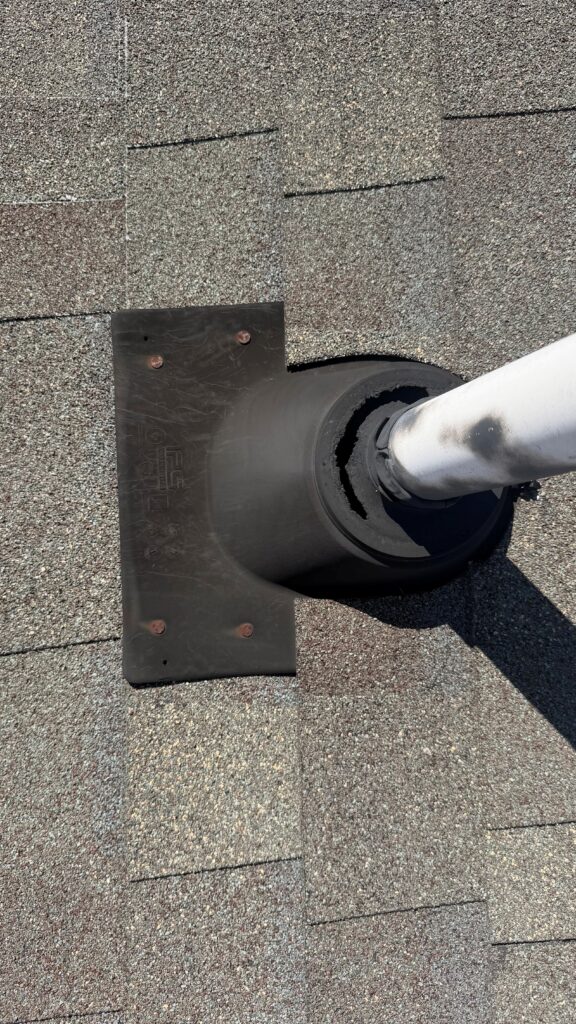
- Pipe boots. The rubber collar around each plumbing vent dries out and cracks in the sun. This is the #1 cause of the "mystery stain" near a bathroom or kitchen. More in our guide to pipe boot leaks.
- Chimney and wall flashing. The metal where the roof meets a chimney, dormer or sidewall can lift, rust or lose its seal.
- Valleys. Where two roof slopes meet, water runs heavy and fast. Worn shingles or missing ice and water shield here leak in hard rain.
- Skylights. Failed flashing or seals around the frame. (Fogging or drips on the glass in cold weather can also be condensation, which we can help tell apart.)
- Wind-lifted or missing shingles. Common after a storm, or when a tree limb hits the roof.
- Clogged gutters. In fall, leaves back water up under the roof edge and into the fascia and soffit.
Repair or Replace?
Most single leaks are a repair: a new pipe boot, new flashing, or replacing a section of damaged shingles. We'll tell you honestly if a repair will do the job. A full replacement usually only makes sense when the roof is near the end of its life, leaks in several places, or has widespread storm damage.
See what roof repairs cost in Charlotte, when a repair can save you a full replacement, and, if you're leaning toward a new roof, what a new roof costs in Charlotte.
Will Insurance Pay for the Leak?
It depends on the cause. Homeowners insurance generally covers sudden damage, like wind, hail or a fallen tree limb, minus your deductible. It usually does not cover a leak from an old, worn-out roof or damage that built up slowly. That's why the photos from step 5 and a written inspection report matter.
If storm damage caused the leak, we document everything with photos and meet your insurance adjuster on site at no extra cost. More in does homeowners insurance cover roof replacement in NC.
Roof Leak Repair Near You
We repair roof leaks across the Charlotte area, including Mint Hill, Matthews, Indian Trail and Harrisburg, plus Charlotte, Monroe, Waxhaw and Stallings. Every inspection comes with photos of what we find.
Call (704) 396-8383 or request a free inspection.
Roof Leak FAQ
What should I do first when my roof is leaking?
Catch the water with a bucket, move your belongings, turn off power to any wet light fixture, take photos, and call a roofer for an emergency tarp. Don't climb on the roof while it's wet.
Can a roof leak be fixed while it's raining?
A permanent repair needs a dry roof. During rain, the right move is a secured tarp to stop the water, then the repair once the roof dries.
Why is my ceiling leaking when the shingles look fine?
Most leaks come from pipe boots, flashing or valleys rather than the shingles, and water can run along the roof deck before it drips through, so the stain is often away from the actual opening.
Does a leak mean I need a new roof?
Usually not. Most single leaks are fixed with a targeted repair. Replacement makes sense when the roof is old, leaks in several places, or has widespread damage.

About the author: Vasily Zhuk
Vasily is the owner of Charlotte Ace Roofing, with 10+ years of hands-on roofing experience. He meets every estimate himself. Charlotte Ace Roofing holds a 5.0 rating across 600+ Google reviews, a BBB A+ rating and Owens Corning Preferred Contractor status. Call (704) 396-8383 for a free roof inspection.


