


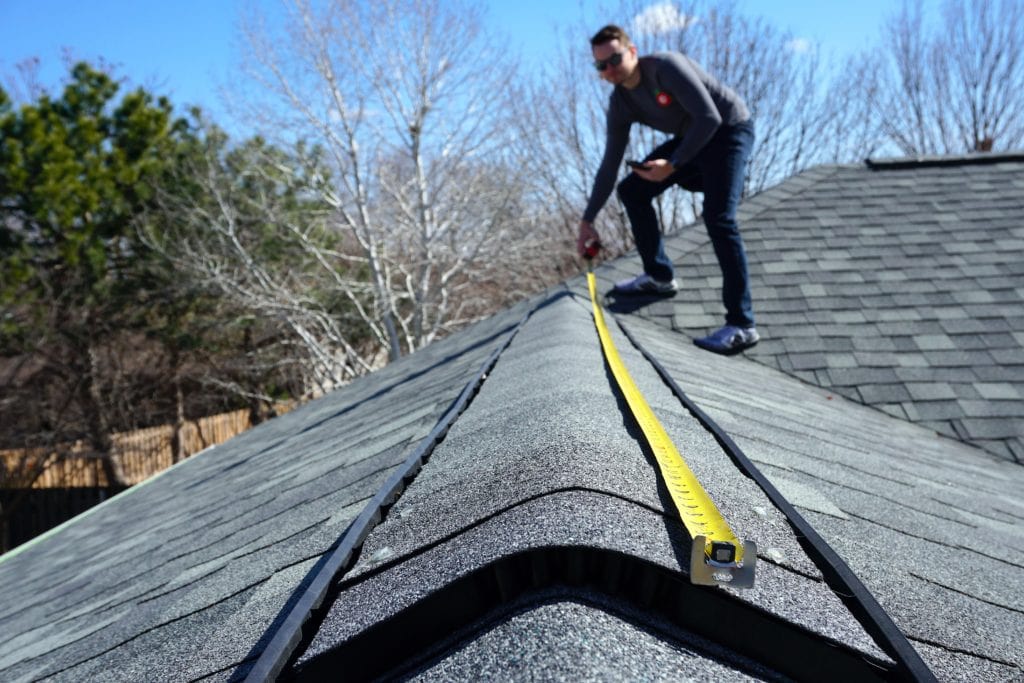
Short answer: homeowners insurance in North Carolina usually pays for roof damage caused by a sudden event like wind, hail or a falling tree, minus your deductible. It usually does not pay to replace a roof that is simply old or worn out. To get a storm claim paid, document the damage quickly, report it to your insurer promptly, have a roofer inspect the roof and meet the adjuster, and make sure every damaged area ends up in the adjuster's report.
Below is exactly how storm claims work for Charlotte-area homeowners, step by step: how to spot hail and wind damage, what to do in the first 24 hours, what happens when the adjuster comes out, and what to do if your claim is denied.
Why Storm Claims Matter More in 2026
North Carolina homeowners insurance base rates went up an average of 7.5% on June 1, 2025 and another 7.5% on June 1, 2026, under a settlement approved by the NC Department of Insurance. Many insurers also charge more for older roofs. With premiums rising, it makes sense to use the coverage you're paying for when a storm really does damage your roof, and to do it the right way so the claim isn't delayed or underpaid.
What Insurance Usually Covers (and What It Doesn't)
- Usually covered: shingles blown off or creased by wind, hail bruises and cracks, a tree or large limb falling on the roof, and the interior water damage those cause.
- Usually not covered: normal wear and tear, an old roof at the end of its life, slow leaks that were ignored for months, and damage from poor installation.
- Depends on your policy: how much you get for an older roof. Some policies pay full replacement cost, others pay "actual cash value," which subtracts depreciation for the roof's age. Your declarations page tells you which one you have, and whether you have a separate wind or hail deductible.
More detail in our guide: does homeowners insurance cover roof replacement in NC.
How to Spot Storm Damage on Your Roof
Wind damage
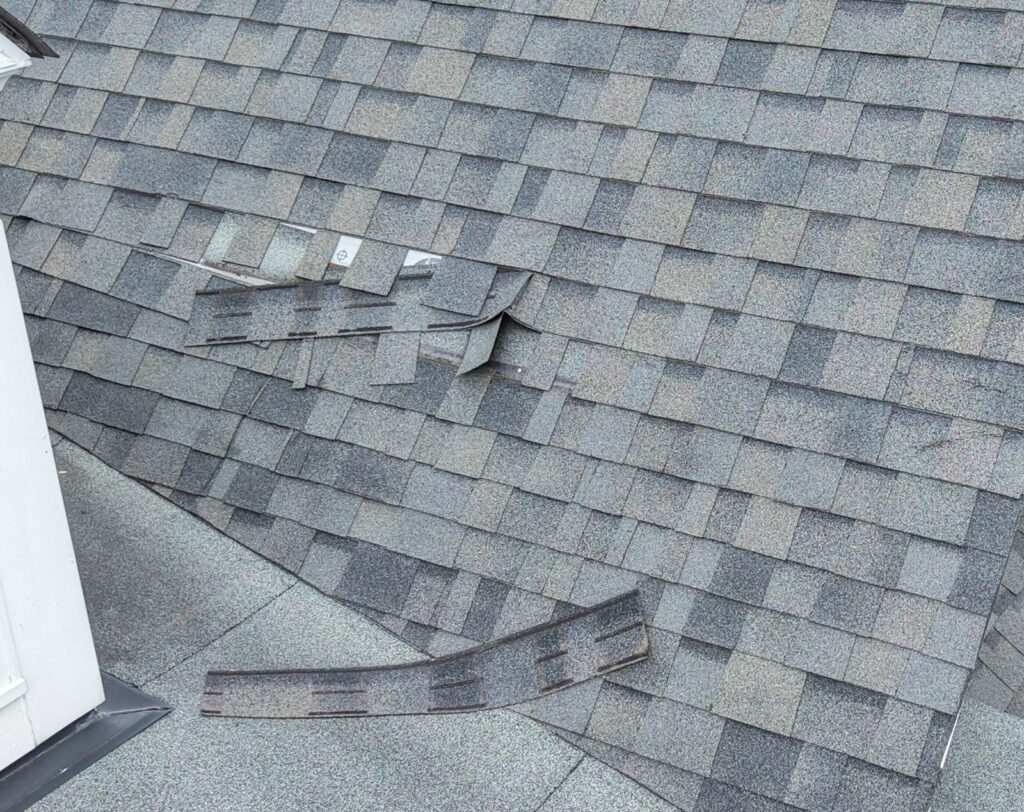
- Shingles in the yard, driveway or gutters after a storm
- Bare spots or a different-colored patch where shingles are missing
- Shingles with a straight crease across them (the wind lifted and folded them, breaking the seal)
- Ridge caps lifted or missing along the top of the roof
- Bent flashing, loose vents or a damaged gutter on the windward side
Hail damage
- Dark spots or "bruises" where granules were knocked off the shingle
- Small dents in gutters, downspouts, roof vents, metal flashing or your mailbox
- Dented or chipped siding, window screens or an AC unit
- Lots of shingle granules washing out of the downspouts right after the storm
Hail damage is hard to see from the ground, and dents on gutters and vents are often the first clue. Hail around the size of a quarter or larger is usually what it takes to damage asphalt shingles.
Tree and limb damage
Charlotte's tree canopy is beautiful, but big oaks and pines drop heavy limbs in storms. Even if a limb only "bounced," it can crack the decking, puncture the underlayment or break shingles. Have it checked even if you don't see a hole.
Inside the house
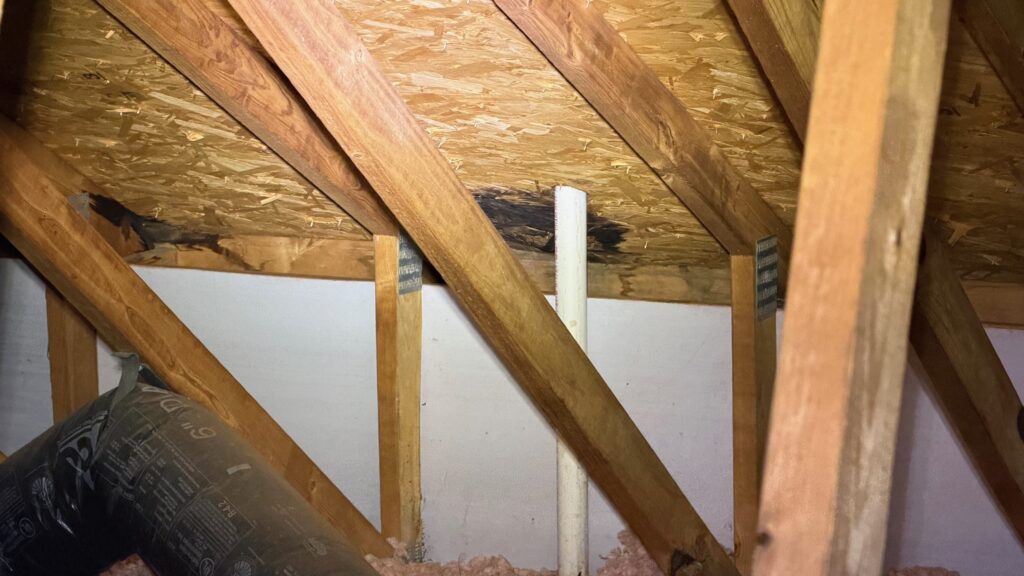
New ceiling stains, drips, damp insulation or wet wood in the attic after a storm all point to roof damage. Fresh stains are important evidence for your claim. If water is coming in right now, see what to do when your roof is leaking.
What to Do in the First 24 Hours After a Storm
- Stay safe. Don't climb on a wet or damaged roof. Stay away from downed power lines.
- Take photos and video from the ground. Shingles in the yard, dented gutters and vents, fallen limbs, and any inside water damage. Note the date and time of the storm.
- Stop more water from getting in. Put buckets under drips and call a roofer for an emergency tarp. Your policy expects you to prevent further damage, and the cost of a tarp is usually part of the claim.
- Keep receipts for tarping, cleanup, or a hotel if the house isn't livable.
- Don't throw away damaged shingles or pieces of siding until the adjuster has seen them or you've photographed them.
How to File a Roof Insurance Claim, Step by Step
1. Get a roof inspection first
Before you file, have a roofer inspect and photograph the roof. If the damage is small and under your deductible, filing may not be worth it, since a claim can stay on your record. If the damage is real, the inspection photos and report give you proof to start the claim. We'll tell you honestly which one it is.
2. Report the claim promptly
Call your insurer or file online. Most policies require you to report damage promptly, and some set a deadline for wind and hail claims. Check your policy, and don't wait months: the longer you wait, the easier it is for an insurer to argue the damage came from something else. Write down your claim number and your adjuster's name.
3. Meet the adjuster with your roofer there
The insurance company sends an adjuster to inspect the roof. Ask your roofer to be there too. Adjusters often have a long list of houses to check after a storm. Having your roofer on the roof makes sure every damaged slope, vent, gutter and piece of flashing gets pointed out and written down. We meet adjusters on site for our customers at no extra cost.
4. Review the estimate line by line
The adjuster's estimate (sometimes called the "scope of loss") lists everything they agreed to pay for. Compare it with your roofer's estimate. Items that are commonly missed include drip edge, ice and water shield, pipe boots, ridge vent, starter shingles, gutter damage and code-required upgrades. If something is missing, your roofer can send the insurer photos and a supplement request.
5. Understand how you'll be paid
Many insurers pay in two parts. The first check is the actual cash value (the replacement cost minus depreciation). After the work is finished, you send proof of completion and they release the rest, often called "recoverable depreciation." Your deductible is your share of the cost. If your mortgage company is named on the check, they may need to sign off too.
6. Get the work done and close the claim
Once the roof is replaced or repaired, your roofer provides the final invoice and photos so you can collect any money the insurer held back. Keep copies of everything for your records and for when you sell the house.
What If Your Claim Is Denied or Underpaid?
- Ask for the denial in writing, with the specific reason and the policy language they're relying on.
- Request a re-inspection. Ask for a different adjuster if possible, and have your roofer attend with photos of the damage.
- Send a supplement for items that were missed, with photos and measurements.
- Look at appraisal. Many policies have an appraisal clause for disagreements about the amount of a loss.
- Get outside help if you need it. The NC Department of Insurance has a consumer services division that helps homeowners with insurance questions and complaints.
Watch Out for Storm Chasers
After a big storm, out-of-town crews knock on doors across Charlotte. Some do fine work, but many are gone before the warranty matters. Be careful with anyone who:
- Offers to "cover" or "waive" your deductible. That can be considered insurance fraud, and you're the one who signs the claim.
- Pressures you to sign on the spot. Read any contract before you sign it, and know what it says about your claim. Here's how a contingency agreement normally works.
- Has no local address, no reviews in your area, or wants a big cash deposit upfront.
See 10 things to check before hiring a roofing company in Charlotte.
Storm Damage Inspections Near You
We inspect storm-damaged roofs and work with insurance claims across the Charlotte area, including Ballantyne, Mint Hill, Matthews, Indian Trail, Monroe, Waxhaw, Huntersville and Harrisburg. See all our service areas.
Not sure if your roof is just old or actually damaged? Read 12 signs you need a new roof. Got a letter from your insurer about your roof's age? See what to do about a non-renewal notice.
Call (704) 396-8383 or book your free storm damage inspection online.
Roof Storm Damage & Insurance FAQ
Will homeowners insurance pay for a new roof after a storm in NC?
If wind, hail or a falling tree damaged the roof badly enough that repairs won't fix it, insurance usually pays to replace it, minus your deductible. If the roof is just old and worn, insurance usually won't pay.
How do I get insurance to pay for roof replacement?
Document the damage right after the storm, report it promptly, have a roofer inspect the roof and meet the adjuster, and review the adjuster's estimate to make sure nothing was left out. Storm damage that is clearly documented is far more likely to be approved.
Should I call my roofer or my insurance company first?
Usually your roofer. A free inspection tells you whether there is real storm damage and whether it's worth filing. If water is actively coming in, do both: get a tarp on the roof and report the claim.
Will filing a roof claim raise my insurance rates?
It can, depending on your insurer and your claim history. That's why it helps to know whether the damage is above your deductible before you file. Ask your agent how a claim would affect your policy.
What does hail damage on a roof look like?
Dark, round spots where the granules were knocked off, soft or cracked spots in the shingle, and dents in gutters, vents and flashing. It's often hard to see from the ground.
Can I get a free storm damage roof inspection in Charlotte?
Yes. Charlotte Ace Roofing offers free roof inspections across the Charlotte area and shows you photos of everything we find. You can book online or call (704) 396-8383.

About the author: Vasily Zhuk
Vasily is the owner of Charlotte Ace Roofing, with 10+ years of hands-on roofing experience. He meets every estimate himself. Charlotte Ace Roofing holds a 5.0 rating across 600+ Google reviews, a BBB A+ rating and Owens Corning Preferred Contractor status. Call (704) 396-8383 for a free roof inspection.


