Roof Leak Detection: What You Need to Know Before Hiring a Professional

Water infiltration through your roof can cause thousands of dollars in damage before you even notice a problem. By the time you see a ceiling stain or dripping water, moisture has often been present for weeks or months, potentially damaging insulation, framing, and drywall, and creating conditions for mold growth. Early roof leak detection prevents minor issues from becoming major structural problems that require extensive and expensive repairs.
The importance of roof leak detection in preventing long-term damage to your home or commercial building cannot be overstated. A small leak that costs $300 to repair today can turn into a $10,000 problem involving structural repairs, mold remediation, and damaged interior finishes if left unaddressed. Understanding how professionals find and diagnose leaks helps you make informed decisions about protecting your property.
Signs You Have a Roof Leak
Water Stains on Ceilings or Walls
Discolored patches on ceilings or upper walls are the most obvious signs of roof leaks. These stains typically appear yellowish, brown, or copper-colored and may expand over time. The stain location doesn't always correspond to the actual leak point—water can travel along rafters, insulation, or other materials before appearing inside your home.
Don't ignore small stains, thinking they'll stay contained. Even minor discoloration indicates moisture penetration that will worsen without intervention. Recent stains may disappear when they dry, only to reappear during the next rain, making the problem seem intermittent when it's actually continuous.
Mold or Mildew Growth
Persistent moisture from roof leaks creates ideal conditions for mold and mildew. You might notice musty odors, visible mold growth on walls or ceilings, or allergic reactions that worsen when you're home. Mold often grows in hidden areas like attics or inside walls before becoming visible in living spaces.
Mold resulting from roof leaks poses health risks and requires professional remediation once it spreads significantly. Early roof leak detection and repair prevent this secondary damage entirely.
Dripping Water or Visible Moisture in Attics
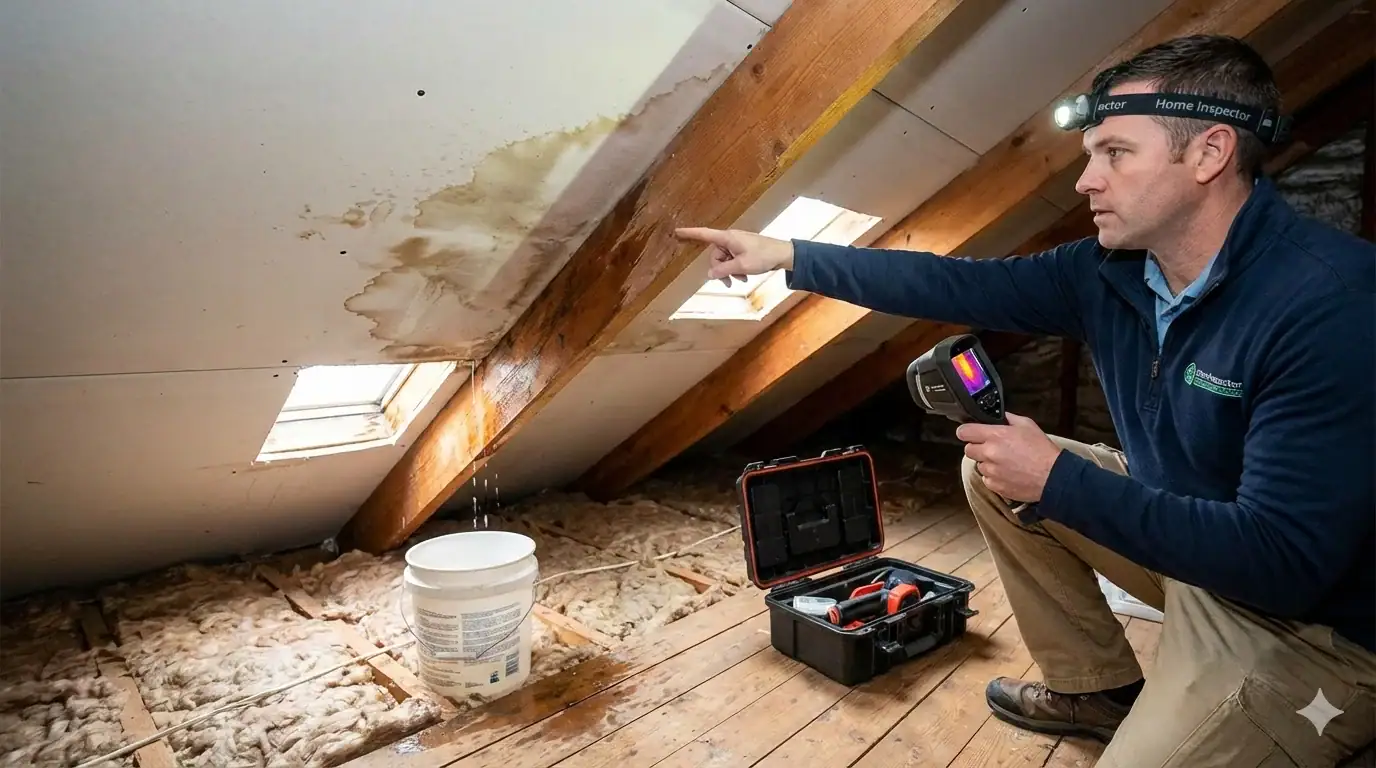
Water actively dripping or visible wet spots in your attic during or after rain clearly indicate roof penetration. Check your attic during heavy rain with a flashlight to spot active leaks. Look for water running down rafters, wet insulation, or puddles on the attic floor.
Even if you don't see active dripping, look for water stains on the roof decking or rafters, which indicate previous or intermittent leaks. Compressed or darkened insulation also suggests moisture exposure.
Missing, Damaged, or Curling Shingles
External roof damage often precedes evidence of interior leaks. Missing shingles leave the roof decking exposed to the weather. Damaged, cracked, or curling shingles no longer provide proper water shedding. Granule loss (shingles looking bald or discolored) indicates aging that compromises waterproofing.
Flashing around chimneys, vents, skylights, and roof valleys deteriorates over time. Separated, rusted, or missing flashing allows water penetration even when surrounding shingles appear intact.
High Energy Bills or Temperature Fluctuations
Wet insulation loses effectiveness, forcing your heating and cooling systems to work harder. Unexplained increases in energy costs or difficulty maintaining consistent indoor temperatures can indicate moisture problems from roof leaks, compromising insulation performance.
This symptom often goes unrecognized because homeowners don't connect energy efficiency with roof condition. However, moisture-damaged insulation can lose 50% or more of its R-value, significantly impacting comfort and utility costs.
Methods of Roof Leak Detection
Professional roof leak detection services employ multiple techniques to accurately locate moisture intrusion, even when leaks are hidden or intermittent.
Visual Inspections
Comprehensive visual inspection forms the foundation of roof leak detection. Professionals examine both exterior and interior areas, looking for obvious damage, wear patterns, and moisture evidence. They check all roof penetrations, flashing details, and vulnerable areas where leaks commonly occur.
Experienced inspectors recognize subtle signs that untrained eyes miss—slight sagging in roof lines, minor sealant deterioration, or early-stage material failure. They also assess overall roof condition to identify areas likely to develop leaks soon.
Infrared Camera Scanning
Infrared thermography detects temperature variations caused by moisture. Wet areas appear cooler than dry sections in thermal images because water retains heat differently than dry materials. This non-invasive technology identifies moisture behind walls, under roofing materials, and in insulation without causing damage.
Infrared scanning works best when temperature differentials exist—typically after sunset when roofs cool but retained moisture stays warmer. This method excels at finding hidden leaks that don't show obvious interior damage yet.
Moisture Meters
Electronic moisture meters measure water content in building materials by detecting electrical resistance or capacitance changes. These handheld devices confirm suspected leaks found through visual inspection or infrared scanning. They provide quantifiable moisture readings that help determine leak severity and extent.
Pin-type meters penetrate material surfaces for direct readings, while pinless meters scan surfaces without causing damage. Professionals often use both types to build a complete picture of moisture distribution.
Dye Testing
For leaks that are difficult to locate, dye testing provides definitive answers. Technicians apply non-staining fluorescent dye to suspected leak areas on the roof exterior, then observe inside the building under ultraviolet light to see exactly where water enters. This method works particularly well for leaks around skylights, chimneys, or complex flashing details.
Dye testing requires experience to apply dye in the correct locations based on water stain patterns and building knowledge. Results are definitive—you can see the exact leak path.
Acoustic Leak Detection
Acoustic devices listen for sounds created by water movement through roof assemblies or pressure changes in membrane systems. This technology works particularly well for commercial roof leak detection on flat or low-slope roofs where water may pond or travel considerable distances from the entry point.
Acoustic methods help narrow search areas on large commercial roofs before using more detailed scanning techniques on specific sections.
What to Expect When Hiring a Professional Roof Leak Detection Service
Initial Roof Inspection and Assessment
Professional roof leak detection services begin with a thorough inspection of both interior and exterior areas. They'll ask about when you notice leaks (during heavy rain, light rain, snow melt), how long problems have existed, and any repairs you've attempted.
The inspector examines your attic, looking for active moisture, stains, or damage patterns. They check the insulation condition and ventilation adequacy. Outside, they assess overall roof condition, age, and specific areas showing wear or damage.
Use of Advanced Technology
Quality roof leak detection and repair companies invest in modern diagnostic equipment. Depending on your situation, they may use infrared cameras, moisture meters, dye testing, or other specialized tools to pinpoint leak sources accurately.
This technology-driven approach finds problems that visual inspection alone might miss, saving time and preventing the "guess and check" repairs that waste money without solving the underlying issue.
Clear and Detailed Reports
Professional services provide comprehensive reports documenting findings. This should include photos of damaged areas, thermal images if applicable, moisture readings, and clear identification of leak sources. The report explains both immediate problems and potential future issues based on the observed roof condition.
Detailed documentation serves multiple purposes—it helps you understand the problem, provides justification for insurance claims if applicable, and creates records for future reference.
Recommendations for Repair or Maintenance
After roof leak detection identifies problems, professionals should present clear repair recommendations with cost estimates. They'll explain whether issues require immediate attention or can be monitored, helping you prioritize repairs based on severity and budget.
Honest contractors distinguish between necessary repairs and optional improvements, giving you information to make informed decisions rather than pressuring you into unnecessary work.

Commercial Roof Leak Detection Services vs. Residential Services
Scale and Complexity Differences
Commercial roof leak detection differs significantly from residential work. Commercial buildings typically feature flat or low-slope roofs with membrane systems (TPO, EPDM, PVC) rather than residential shingle roofs. These roofs cover much larger areas where leaks can travel far from entry points before causing interior damage.
Commercial detection often requires specialized equipment and techniques suited to membrane roofing systems. Infrared scanning becomes particularly valuable on large commercial roofs where visual inspection alone would be time-prohibitive and less accurate.
Business Disruption Considerations
Commercial roof leak detection services work around business operations, often conducting inspections during non-business hours to avoid disruption. They understand the urgency when leaks threaten inventory, equipment, or business operations.
Response time and repair scheduling flexibility matter more in commercial contexts where every hour of operation counts. Many commercial leak detection services offer emergency response for active leaks causing immediate damage.
Documentation Requirements
Commercial properties require more extensive documentation for insurance, property management, and regulatory compliance. Commercial roof leak detection services provide detailed reports that satisfy these requirements, including condition assessments, remaining service life estimates, and maintenance recommendations.
Warranty and Maintenance Programs
Commercial roof leak detection often connects to ongoing maintenance programs and warranty compliance. Many commercial roofing warranties require regular inspections and documented maintenance. Professional detection services help building owners maintain warranty coverage while preventing expensive failures.
Making the Right Choice for Roof Leak Detection
Don't wait for small leaks to become major problems. If you notice any signs of roof leaks—stains, mold, visible damage, or unexplained energy costs—schedule professional roof leak detection promptly.
Early detection and repair protect your property investment and prevent the stress and expense of dealing with extensive water damage. The cost of finding and fixing a leak today is always less than the cost of repairing the damage tomorrow.