Multi-family, commercial, mill-conversion, and limited single-family roofing for South End property owners and managers in 28203 and 28209 — the neighborhood that transformed from Charlotte's first industrial district (anchored by D.A. Tompkins's 1893 Atherton Cotton Mill, once dubbed "the Manchester of Charlotte") into the city's most active transit-oriented urban district after the 2007 Lynx Blue Line opened, with $2.2 billion in subsequent redevelopment. We do TPO and EPDM commercial flat-roof work on the brewery taprooms, mill conversions, and mid-rise apartment buildings along the 3.5-mile Rail Trail; full asphalt and metal residential reroofs on the Wilmore-edge single-family homes; and HOA-coordinated multi-family work for property managers across the district.
South End is unlike any other Charlotte neighborhood from a roofing perspective. Predominantly apartment, condo, and adaptive-reuse mill buildings — not single-family residential. The neighborhood traces back to 1852 when the city's first railroad line (connecting Charlotte to Columbia and Charleston) established what became Charlotte's first industrial district. D.A. Tompkins's Atherton Cotton Mill broke ground November 8, 1893 — the area's first major industrial structure — and by 1895 the Charlotte Daily Observer was calling the corridor between South Boulevard and the railroad tracks "the Manchester of Charlotte." The mills moved away in the mid-20th century. The neighborhood was an industrial wasteland through the 1980s. The 1990s renovation of Atherton Mill sparked the comeback. The 2007 Lynx Blue Line light rail completed the transformation. Today South End is approximately 18,000-19,000 residents living mostly in apartments and condos built since 2007, with $2.2 billion in completed redevelopment and another $1 billion in the pipeline.
South End sits in 28203 and 28209, immediately south of Uptown along South Boulevard and South Tryon Street. The 3.5-mile Rail Trail runs parallel to the Lynx Blue Line through the heart of the neighborhood. Boundaries are roughly Morehead Street to the north, the West Boulevard / Remount Road area to the south, I-77 to the west, and Kenilworth Avenue / Cleveland Avenue to the east — with Wilmore (a Charlotte Local Historic District since 2007) on the western edge and Dilworth (a Charlotte Local Historic District since 1987) immediately to the east. The neighborhood was named "Historic South End" in the mid-1990s by Shook Kelley design firm — intentionally tongue-in-cheek given how few historic buildings actually remained at the time. The name stuck.
Three from recent South End / South Charlotte work showing the range of what we do here:
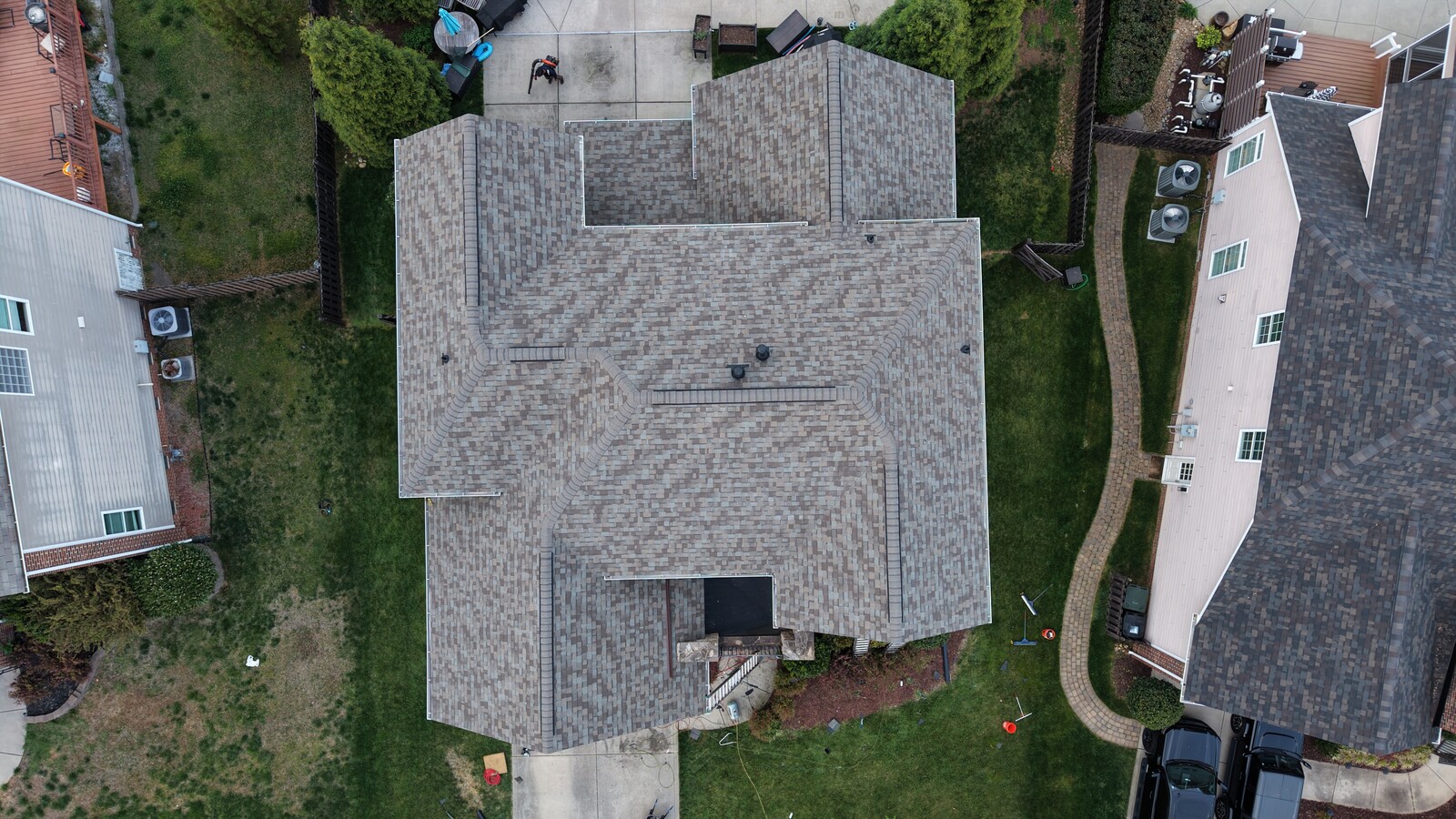
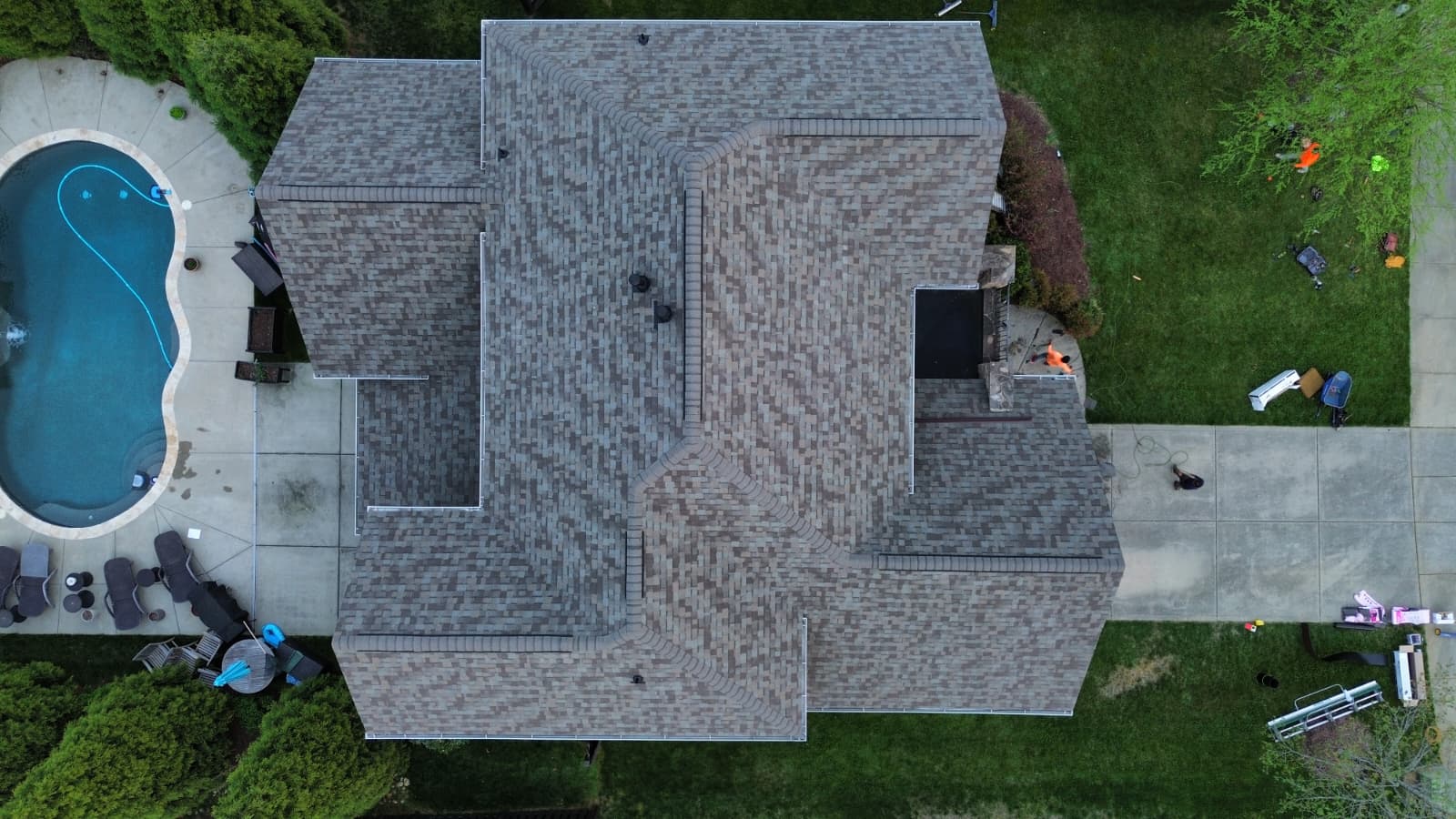
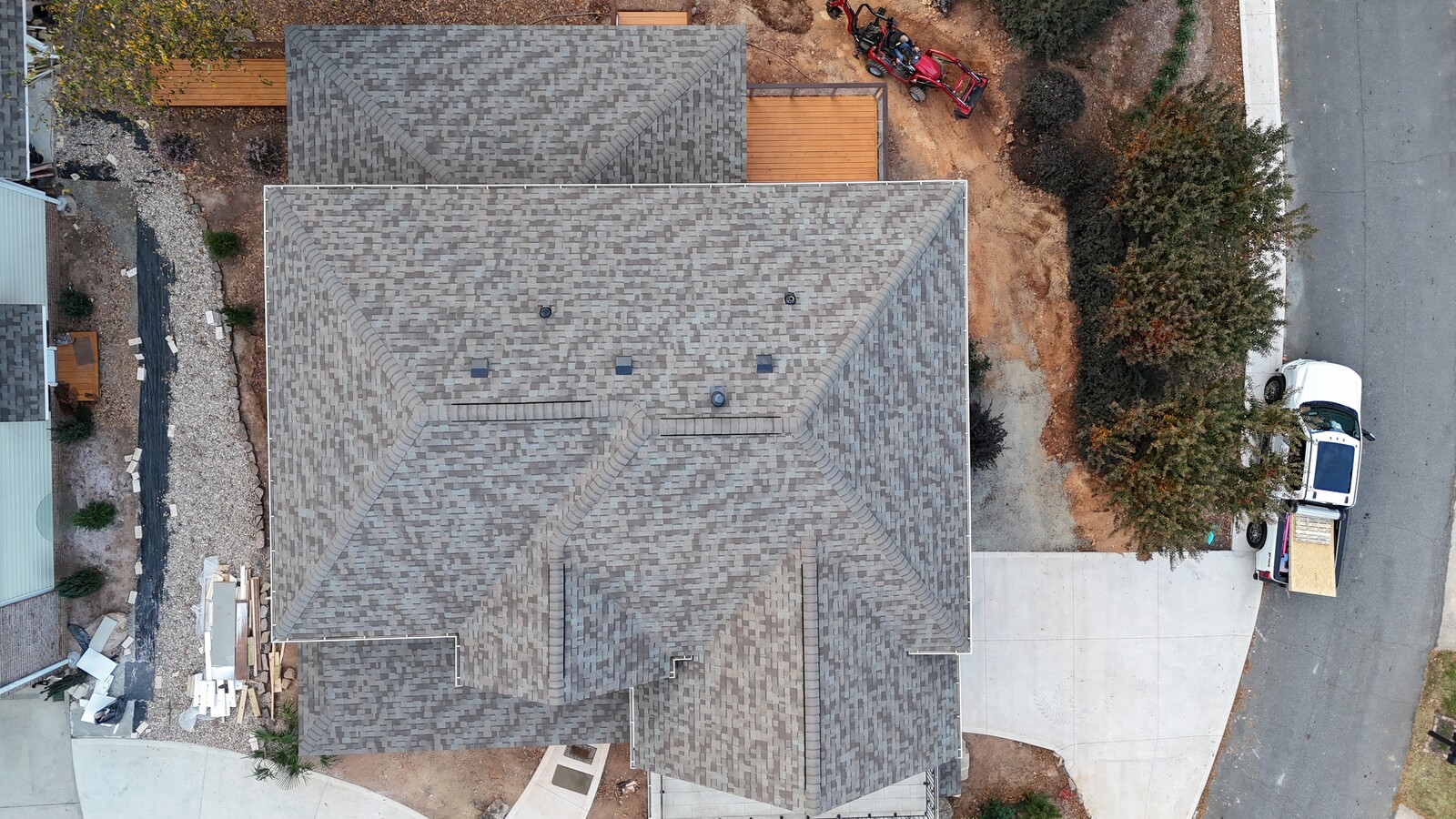
Photos shown are from recent Charlotte-area projects representative of our crew's work. South End itself has limited single-family inventory — most of our South End work is on multi-family, commercial, and mill-conversion buildings.
Most South End properties fall into one of three buckets, each with very different roofing scopes — this is fundamentally different from the rest of Charlotte where single-family residential dominates:
The single most important fact about South End's modern roofing market: the neighborhood essentially as it exists today was built in the past 18 years. The Lynx Blue Line light rail opened in 2007, sparking what one analyst called "an explosion of development." Property values doubled almost immediately. By 2018, South End was named the fastest-growing apartment submarket in the United States. Over 8,000 new residents and 6,000 new housing units have been added since the rail line opened. Most of the apartment and condo buildings in South End are now 8-18 years old, which means many are now in the early end of their first major commercial roof maintenance and replacement cycle — TPO and EPDM commercial systems typically need refresh / replacement at 15-25 years depending on installation quality, foot traffic from rooftop equipment service, ponding water issues, and warranty terms.
D.A. Tompkins's Atherton Cotton Mill is where it all started — broke ground November 8, 1893, became the first major industrial structure in what's now South End. By 1895 the Charlotte Daily Observer called the corridor between South Boulevard and the railroad tracks "the Manchester of Charlotte." Other major mill conversions:
Adaptive-reuse mill roofing requires understanding what's underneath. Many of these buildings have:
South End was one of Charlotte's most heavily industrial districts — for over a century, factories, distributors, auto shops, gas stations, dry cleaners, and chemical plants generated chemicals that seeped into the soil and groundwater. The 1990s revitalization happened largely because of North Carolina's brownfields program (created in 1997), which protects developers from environmental liability if they take specific cleanup steps. Over 30 South End properties have gone through the brownfield program — including Atherton Mill, the 1616 Center, the Camden Gallery apartments site (former private garage / industrial sewing machine company / auto repair / paint contractor / AC equipment distributor), the Pollack Shores apartment site on West Tremont (former Charlotte Oil and Fertilizer / Virginia-Carolina Chemical), and the property across from Sycamore Brewing (former DynaTech chrome electroplating). For most roofing scopes this is not a factor — debris stays on the roof and goes to standard roofing waste disposal. But for major scopes that require below-roof structural penetration on older industrial buildings, we follow standard waste-handling protocols.
Important practical fact for South End single-family work: the western and eastern edges of South End blur into Wilmore (Charlotte Local HD since 2007) on the West Boulevard side and Dilworth (Charlotte Local HD since 1987) on the East Boulevard side. Both Wilmore and Dilworth REQUIRE a Certificate of Appropriateness from the Charlotte Historic District Commission for any visible exterior change including roofing. We always confirm exact street and parcel boundary before quoting any single-family work in the South End / Wilmore / Dilworth border zones — what looks like South End on a map may technically fall inside Wilmore or Dilworth Local HD boundaries with very different approval requirements and material restrictions.
The heart of the redeveloped South End. Adaptive-reuse mill roofing, brewery taproom commercial work, mid-rise apartment and condo TPO/EPDM systems.
The main commercial spine. Mid- and high-rise apartment buildings, retail, restaurants, brewery taprooms.
The western parallel commercial spine. Office (Lowe's tech tower, The RailYard with Allstate and Ernst & Young), mixed-use, and apartments.
Adaptive-reuse mill buildings and the Design District retail/dining (Atherton Mill, Abercrombie & Fitch, Jeni's, etc.) along Camden Street.
Around the New Bern Lynx Blue Line station — significant apartment construction (The Edge, The Brinkley) and commercial development.
Around the Scaleybark Station to the south. Industrial / entertainment area that has rebranded itself as "LoSo" as South End cachet expanded southward.
The western edge near where gold was discovered on what is now West Morehead Street in the 1800s. Wooden Robot Brewing area.
The single-family residential zone where South End blurs into Wilmore. CAREFUL: any work inside Wilmore Local HD requires Certificate of Appropriateness.
The eastern boundary where South End meets Dilworth. CAREFUL: any work inside Dilworth Local HD requires Certificate of Appropriateness.
The neighborhood immediately south of Dilworth, west of Park Road. Similar mill-village heritage and active teardown / new-construction market.
One of Charlotte's six Local HDs. COA required for visible exterior changes including roofing materials and color.
Charlotte's first suburb (Edward Dilworth Latta + Edison electric streetcar, 1891). COA required for visible exterior changes including roofing materials and color.
South End sits squarely inside the Charlotte hail corridor. The Charlotte metro had significant hail events in 2020, 2021, 2022, 2023, and 2024 — multiple events in some years. For multi-family and commercial property managers, post-storm inspection is critical — TPO, EPDM, and modified bitumen systems show hail damage differently than asphalt shingles, and damage can be missed without proper documentation. We provide free post-storm inspections for property managers and condo HOAs, document damage with aerial drone imagery, and work directly with commercial insurance carriers on claims. For the few single-family South End homes, the standard residential hail-claim process applies — typical claim window is one year from the storm event, sometimes longer depending on your carrier.
Whether you're a property manager responsible for a 6-story apartment building on the Rail Trail, a brewery owner whose former-warehouse taproom needs a new TPO membrane, the HOA board for a converted mill building, or one of the relatively few South End single-family homeowners with a Wilmore-edge bungalow due for reroof — we know how to scope South End roofing properly. The neighborhood's mix of multi-family, commercial, mill-conversion, and limited residential is fundamentally different from any other Charlotte neighborhood, and we work in all four building types here every week.
Most South End calls fall into one of these six categories. If your situation doesn't fit neatly, we'll still give you a straight answer.
Full tear-off and replacement using Owens Corning, IKO, or GAF architectural shingle systems. Standard residential service for the limited South End single-family inventory — and for the sloped-roof sections of South End multi-family and condo buildings that combine asphalt with TPO low-slope sections.
Targeted repairs for leaks, missing shingles, flashing failures, valley issues, and chimney flashing problems. Most South End repairs scheduled within the same week.
Free post-storm inspections, documentation packages for your insurance carrier, and on-site adjuster meetings. We've handled hundreds of hail claims across South End, the broader 28203 / 28209 ZIPs, and central Charlotte. Specialized in commercial post-storm inspections for property managers and condo HOAs — TPO, EPDM, and modified bitumen show hail damage differently than asphalt shingles, and damage is often missed without proper documentation.
Specialty work on South End's adaptive-reuse mill buildings and brewery taprooms — Atherton Mill (1893), Camden Cotton Mills, Factory South (former Lance factory), the Design Center of the Carolinas (former Nebel's Knitting), 1616 Center, plus the brewery taprooms (Sycamore, Triple C, Wooden Robot, Lenny Boy, Legion Trolley Barn, Hi-Wire, Gilde, and others). TPO, EPDM, modified bitumen, PVC, and standing-seam metal — plus careful detailing around historic parapet walls, skylights, monitors, and clerestory windows.
For South End property managers and HOAs: full TPO, EPDM, modified bitumen, and PVC commercial flat-roof systems on apartment and condo buildings, mill conversions, and brewery taprooms. Most South End multi-family buildings built since 2007 are now in the early end of their first commercial roof maintenance and replacement cycle.
Seamless aluminum and copper gutter systems with leaf guards — valuable on the limited South End single-family residential inventory and on the sloped-roof sections of multi-family / townhome buildings. We also handle scupper replacement, internal-drain refurbishment, and parapet-wall flashing on commercial flat-roof systems where applicable.
Most Charlotte-area roofers offer 1–2 year workmanship warranties. We offer five — and we honor every claim, no questions asked.
If anything fails because of how we installed your roof — leaks, lifted shingles, flashing failure, anything — we fix it at no cost for five full years. No fine print, no deductible, no "wear and tear" loopholes. We installed it; we own it.
This sits on top of Owens Corning's lifetime limited warranty on the shingle materials themselves. As an Owens Corning Preferred Contractor, we can also offer extended warranty options that include labor and tear-off coverage on qualifying systems.
Real reviews from real South End, Dilworth, Sedgefield, Wilmore, Madison Park, and central Charlotte property owners and managers. Read them on Google.
Accredited Business with the Better Business Bureau. Verify on BBB.org.
Certified to install Owens Corning's full shingle line including the designer/luxury Berkshire and TruDefinition Designer series — only Preferred Contractors can offer them with the extended manufacturer warranties.
We've worked on multiple South End adaptive-reuse mill buildings, brewery taprooms, and apartment/condo communities. South End roofing is fundamentally different from the rest of Charlotte — we know how to scope multi-family TPO and EPDM systems, coordinate with property managers and condo HOAs, and detail around historic parapet walls, skylights, and clerestory windows on mill conversions.
We meet your adjuster on-site, document the full scope of storm damage including specialty materials, and advocate for everything your policy covers — at no extra cost.
We're not a national franchise routing leads. Our crews are working in 28210, 28211, and 28226 nearly every week, which means faster scheduling and faster repair turnarounds.
Read every single one of our verified 5-star reviews directly on Google.
Based on 500+ verified Google reviews from South End, Dilworth, Sedgefield, Wilmore, and the surrounding central Charlotte neighborhoods.
View All Reviews on Google →Locally owned and locally operated. Free estimates anywhere in our service area.
Call now or submit the form — most quotes returned the same business day.
📞 704-396-8383Yes — though South End has a smaller single-family inventory than most Charlotte neighborhoods. South End is predominantly apartment and condo housing, with most single-family homes located along the Wilmore-edge boundary, in scattered pockets near Atherton Mill, and in the few remaining bungalow-style mill homes that haven't been replaced by multi-family development.
Standard asphalt-shingle replacement runs $9,500-$24,000+ depending on size, complexity, and decking condition. The handful of remaining 1900s-1920s mill-era cottages may need full deck replacement during a reroof — those original 1x4 spaced pine sheathing systems are now over a century old. Larger renovated single-family homes typically run $14,000-$22,000.
Decking work on 1927-1945 historic homes can add an additional $4,000–$12,000+ depending on roof size and underlying rot found during tear-off.
No. Despite the 'Historic South End' branding (a tongue-in-cheek name coined by Shook Kelley design firm in the mid-1990s), South End is NOT a Charlotte Local Historic District. Charlotte's six Local HDs are Dilworth, Fourth Ward, Hermitage Court, Plaza-Midwood, Wesley Heights, and Wilmore. So no Certificate of Appropriateness is required for roofing decisions in South End proper. However: the western and eastern edges of South End blur into Wilmore (Local HD since 2007) and Dilworth (Local HD since 1987), and both REQUIRE COA approval for visible exterior changes including roofing. Always confirm the exact street and parcel boundary before quoting any single-family work in the South End / Wilmore / Dilworth border zones — what looks like South End on a map may technically fall inside Wilmore or Dilworth Local HD with very different approval requirements. Some individual mill buildings within South End are also protected as Charlotte-Mecklenburg Historic Landmarks (especially Atherton Mill from 1893).
Depends on the building. For the limited number of original 1900s-1920s single-family mill-village cottages still standing in the South End / Wilmore-edge area: almost always, at least partially. Most were built with 1x4 (sometimes 1x6) spaced pine sheathing intended for the wood-shake or original asphalt-shingle roofs of that era — after 100+ years, much of that original sheathing is split, rotted at the eaves, or no longer holds nails reliably.
For mill-conversion adaptive-reuse buildings, the original 1890s-1920s heart-pine timber roof structure is typically still sound after 130+ years — deck conditions vary depending on whether and when previous adaptive-reuse work modified the roof. For modern (post-2007) apartment, condo, and mid-rise buildings, decking is modern OSB or plywood with TPO/EPDM/modified bitumen membranes — deck replacement is rarely needed during commercial roof refresh, though insulation board and cover-board replacement is common at 15-25 years. We document deck condition with photos before and after on every project.
Yes. South End has one of Charlotte's highest concentrations of adaptive-reuse mill buildings turned commercial space — Atherton Mill (originally built 1893 by D.A. Tompkins, redeveloped by EDENS in 2019), Camden Cotton Mills, Factory South (former Lance factory), the Design Center of the Carolinas (former Nebel's Knitting), 1616 Center, Atherton Lofts, plus the brewery taprooms (Sycamore Brewing, Triple C Brewing, Wooden Robot, Lenny Boy, Legion Brewing's Trolley Barn, Hi-Wire, Gilde, and others past and present). These buildings combine 1890s-1920s industrial architecture with modern adaptive-reuse modifications — they typically have low-slope or flat sections requiring TPO, EPDM, modified bitumen, or PVC systems, often with original parapet walls, skylights, monitors, and clerestory windows that require specialized flashing detailing. We install and service all common commercial systems and have experience with the unique requirements of historic mill-building roofing.
Yes — this is a meaningful part of our South End work. The neighborhood is predominantly apartment and condo housing with over 18,000 residents, mostly in mid- and high-density buildings built since the 2007 Lynx Blue Line opened. We work with property management companies, condo HOAs, and individual unit owners. Roof scopes vary — many newer 4-7 story buildings have low-slope TPO or modified-bitumen sections combined with sloped asphalt or standing-seam metal accents on the upper levels. Taller mid-rise and high-rise residential buildings typically have full TPO or PVC commercial systems. Property-management coordination, scheduled tenant notifications, and weekend / off-hours work scheduling are all standard for us on these projects.
Possibly. South End sits squarely inside the Charlotte hail belt, and the typical claim window is one year from the date of the storm event (sometimes longer depending on your carrier). The Charlotte metro had significant hail events in 2020, 2021, 2022, 2023, and 2024 — so there's a strong chance your building has been through at least one. For commercial buildings, post-storm inspection is critical — TPO, EPDM, and modified bitumen show hail damage differently than asphalt shingles, and damage is often missed without proper documentation.
If your shingles are 8+ years old and you've been through a hail or high-wind event recently, request a free inspection from us. We'll document any damage in writing — and if it's not enough to justify a claim, we'll tell you that too.
Single-family South End replacements are typically 1–3 days from tear-off to cleanup. Multi-family buildings vary widely — small townhome and condo communities can be done in 3-7 days, larger 4-7 story apartment buildings can be 1-3 weeks, and mid-rise / high-rise commercial roof projects can run multiple weeks depending on scope. Adaptive-reuse mill commercial scopes are project-by-project. We always give you the exact schedule before signing and coordinate property-management notifications and tenant communication.
Two layers. The first is our 5-year full workmanship warranty — the longest in the Charlotte-metro roofing industry. If anything fails because of how we installed it, we fix it at no cost for five full years. No fine print, no deductible, no "wear and tear" exclusions, no questions asked. Most Charlotte-area roofers offer 1–2 year workmanship warranties; we offer five.
The second is the manufacturer's lifetime limited warranty on the shingle materials themselves. As an Owens Corning Preferred Contractor we can also offer extended manufacturer warranty options that include labor and tear-off coverage on qualifying systems for additional decades.
Yes. Charlotte Ace Roofing is fully insured — we carry general liability and workers' comp insurance, and proof of insurance is included with every estimate. We're an Owens Corning Preferred Contractor and BBB A+ accredited. Always verify a roofer's insurance before hiring, especially for historic-district work.
For South End we install: commercial flat-roof systems — TPO, EPDM, modified bitumen, and PVC for apartment and condo buildings, mill conversions, and brewery taprooms; residential asphalt shingles in standard and designer lines (Owens Corning Duration, Duration STORM, TruDefinition, TruDefinition Designer, Berkshire; IKO Cambridge; GAF Timberline HDZ); standing-seam metal for accent sections and contemporary residential / commercial; and copper flashing and accent details. We'll recommend the right system for your building, occupancy type, and budget.
Yes — we partner with several home-improvement lenders to offer flexible financing, including 0% intro APR options for qualified buyers. Ask about it on your free estimate call.
Charlotte Ace Roofing serves homeowners across Mecklenburg, Union, Cabarrus, Iredell, Gaston, Lincoln, and York counties. Click your area below.
We service the entire Charlotte metro region. Call for a free estimate.
📞 704-396-8383